
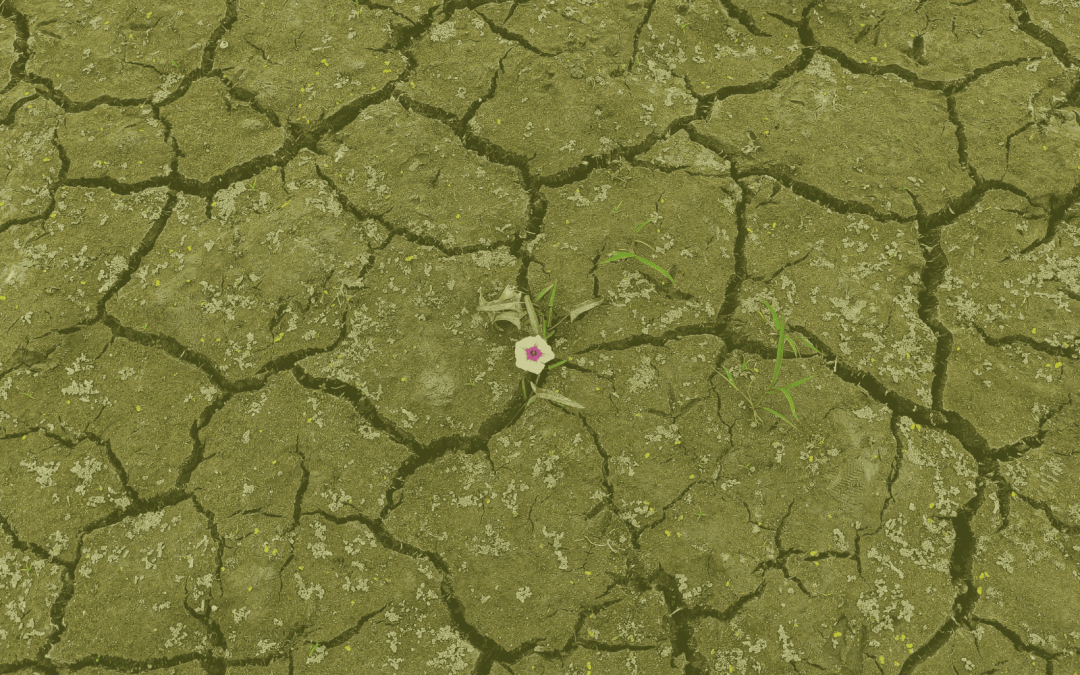
Water is becoming an increasingly scarce and precious resource.
And this inevitably leads to changes, particularly in the field of agriculture.
Whilst for years the focus has been on increasing productivity, the priority is now different: producing food using less water.
The water crisis is no longer an occasional emergency linked to scorching summers, but a structural transformation set to change crops, regions and technologies.
According to the latest UN report, water basins and wetlands are shrinking at a rapid rate; suffice it to say that more than half of the world’s major lakes have lost water since the early 1990s, and in 50 years humanity has lost around 410 million hectares of natural wetlands.
All of this naturally has repercussions for the human population as well:
- around 2.2 billion people still lack access to safely managed drinking water
- 3.5 billion lack sanitation facilities
- almost 4 billion face severe water scarcity for at least one month a year
The freshwater crisis is a fundamental issue for the Earth, as it is closely linked to climate change, biodiversity loss and land use. All these factors affect our food system, social inequalities and even our health.
Italy: dwindling water resources
The water crisis is also affecting Italy.
In recent years, Italy has experienced alternating long periods of drought and extreme weather events, which have nevertheless failed to replenish aquifers and reservoirs. In fact, according to ISPRA reports, several areas of the country continue to experience severe water stress, but a significant finding is that the national water balance for the year 2025 has confirmed a worrying trend: the availability of renewable water resources in Italy continues to decline, with a significant drop compared to 2024 and historical averages.
In 2025, total rainfall in Italy reached 963.4 mm, corresponding to approximately 291 billion cubic metres of water, marking a 9% decrease compared to 2024. Renewable water resources (precipitation minus evapotranspiration) were as much as 19% lower than in 2024.
Agriculture, a sector increasingly exposed to the water crisis
Agriculture is undoubtedly the sector that consumes the most water, but water scarcity is becoming a serious problem for Italian farms, going far beyond seasonal drought-related emergencies.
According to ISTAT data on water statistics for 2026, over 90% of Italian farms reported problems relating to water availability in 2024. The situation is more critical in the South: 97.5% of farms in the South, 98.8% on the islands and 99.2% in Sicily reported water supply problems.
The analysis also reveals significant regional differences.
In Northern Italy (66% of the national irrigable area), the irrigation system is more structured thanks to the presence of land reclamation consortia and collective water distribution networks, whilst in Central and Southern Italy self-supply via private wells and farm reservoirs prevails, which makes farms more vulnerable during periods of water scarcity and increases the risk of groundwater overexploitation. Naturally, small farms are the hardest hit; in fact, according to the report, almost 59% of agricultural businesses reporting irrigation problems own less than 10 hectares, whilst larger farms are relatively better equipped to cope with the effects of the climate crisis thanks to greater investment capacity.
Water also influences production choices
The water crisis will not affect all sectors of production in the same way. Some sectors will be forced to relocate, whilst others will have to adapt. For example, crops such as maize, rice and certain intensive horticultural crops could gradually become less sustainable in various parts of the country, as they require large quantities of water, particularly during the hottest summer months. It is no coincidence that, in many parts of the north, farmers are already reducing the area under rice cultivation, replacing it with sorghum, soya, less water-intensive cereals and alternative protein crops.
Not just a climate crisis
The ISTAT analysis shows us that, in reality, the water crisis does not depend solely on reduced rainfall and rising temperatures, but also on infrastructural and management issues. Among the main causes are water losses in the networks or a failure to store water when available, a shortage of reservoirs, and delays in investment. In recent years, through the government and the PNNR, around €4 billion has been invested to modernise the networks, create new reservoirs, and digitise irrigation systems or consumption monitoring. In addition to these measures, there is the Water Fund – SFNIISSI (2026), with a budget of €1 billion, established to support investment in the water sector and facilitate access to funding for the construction of water infrastructure in Italy.
Precision farming will become mandatory
The technological response to water scarcity is already underway. The agriculture of the future will tend to use far more technology and generate far less waste.
Among the most significant innovations are: sensors to monitor soil moisture, smart drip irrigation, drones and satellite imagery, predictive software, and real-time climate monitoring systems.
The national AGRITECH project, also funded through the PNRR, aims precisely to increase the resilience and sustainability of the Italian agri-food sector through digital innovation and climate adaptation.
The objective will be to move from ‘water-intensive’ agriculture to extremely precise management of this resource.
The decisive challenge of the next twenty years
Climate change is accelerating faster than infrastructural and bureaucratic transformations, and if the agricultural system does not invest in innovation, efficiency and sustainable water management, many crops risk becoming economically unsustainable. This is also because, depending on how the country manages these changes, not only harvests and prices but also territorial balance, rural employment and food security will be at stake.
Measure before you decide.
Faced with this scenario, Lifely, in collaboration with the CNR, has carried out a research and development project in which an IoT control unit has been developed that is capable of measuring both the water and energy footprints of each irrigation cycle in real time, with a specific focus on the small farms and agritourism businesses typical of the Sardinian region.
Discover SPRITZ (an acronym for Sensorized Platform for the Reconfiguration of Irrigation based on Zone measurements).
Sources:
- https://www.operate.it/2026/04/10/risorse-idriche-in-calo-i-dati-ispra-2025-e-le-sfide-per-litalia/
- https://www.istat.it/wp-content/uploads/2026/02/Focus_Innovazione-e-pratiche-sostenibili-in-agricoltura_Anno-2024.pdf
- https://www.istat.it/wp-content/uploads/2026/03/GMA2026_Focus_DEF.pdf
- https://www.invitalia.it/incentivi-e-strumenti/fondo-idrico-sfniissi
- https://sostenibilita.enea.it/projects/agritech
- https://www.italiadomani.gov.it/it/news/dal-pnrr-4-3-miliardi-di-euro-per-il-settore-idrico.html